Samburu animals at a glance
Samburu National Reserve is dry bush country along the Ewaso Nyiro River. Visitors come for elephants, lions, leopards and cheetahs, for antelope such as impala and the greater and lesser kudu, and for a long list of birds. A separate group of five species, the Samburu Special Five, has its own page.
No guide can promise a sighting of a particular animal. Chances for elephants and antelope are good on a few drives, and big cats take more patience and luck. The numbers below always come with a place and a year, because none of them is a count of the animals in the reserve today.
Elephants
Decades of research along the river.
Save the Elephants has run a research centre in the area since 1997. Over the decades its team has recorded more than 900 individually known elephants that use the reserves along the Ewaso. That number reflects many years of work. It is not the number of elephants in Samburu today, so treat it as a sign of how well the animals are known and not as a head count.
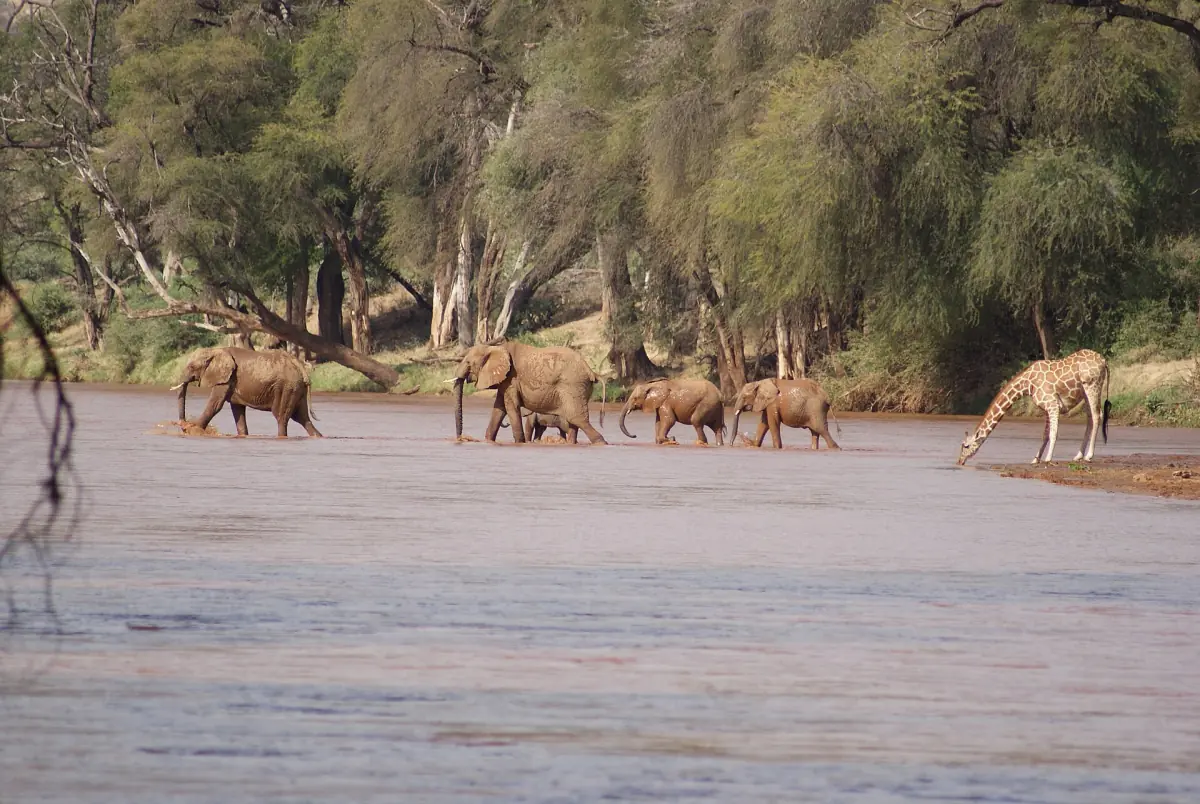
Photos show elephants crossing the river in a group, once together with a giraffe. The river and its banks are where you can expect to look first. For a quieter look at the species, there is the Reteti sanctuary, described on the Reteti Elephant Sanctuary page.
Lions, leopards and cheetahs
Lions have been studied here since 2003. The research project Ewaso Lions monitors about 50 animals, cubs included, across the wider Samburu and Isiolo area and parts of Laikipia. The number of prides has grown since 2022. The team suspects that the drought played a role, but that is an assumption and not a proven cause.
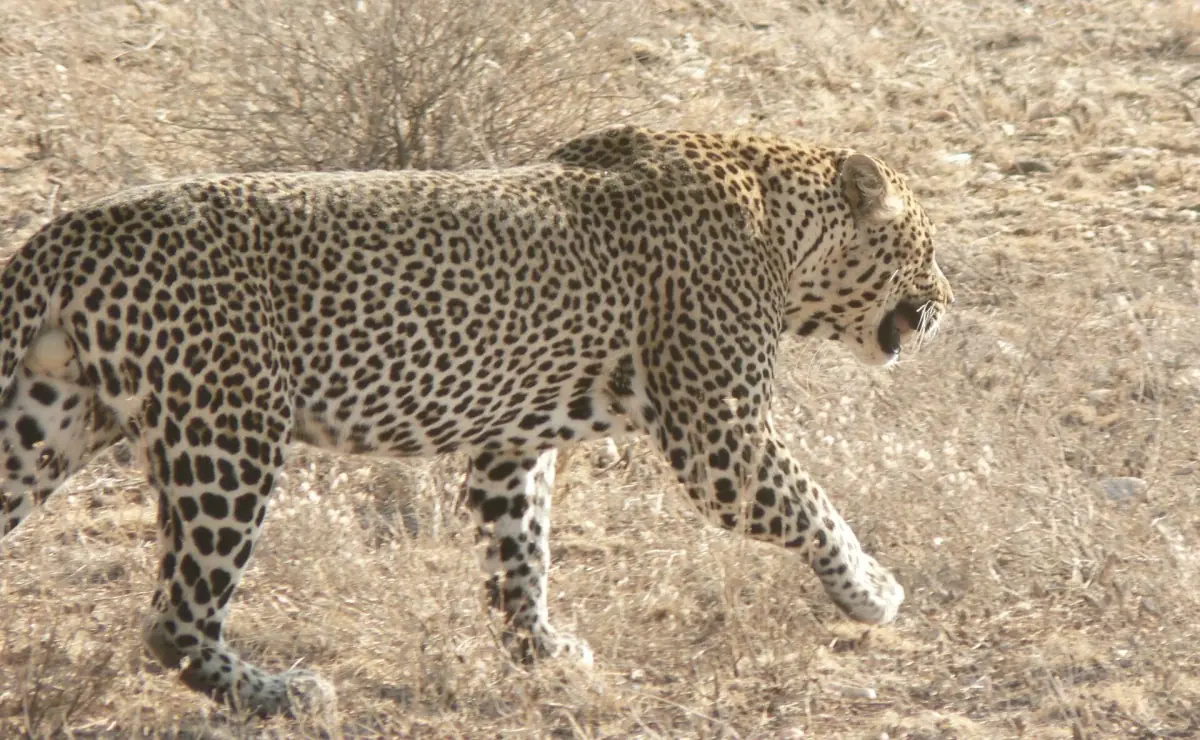
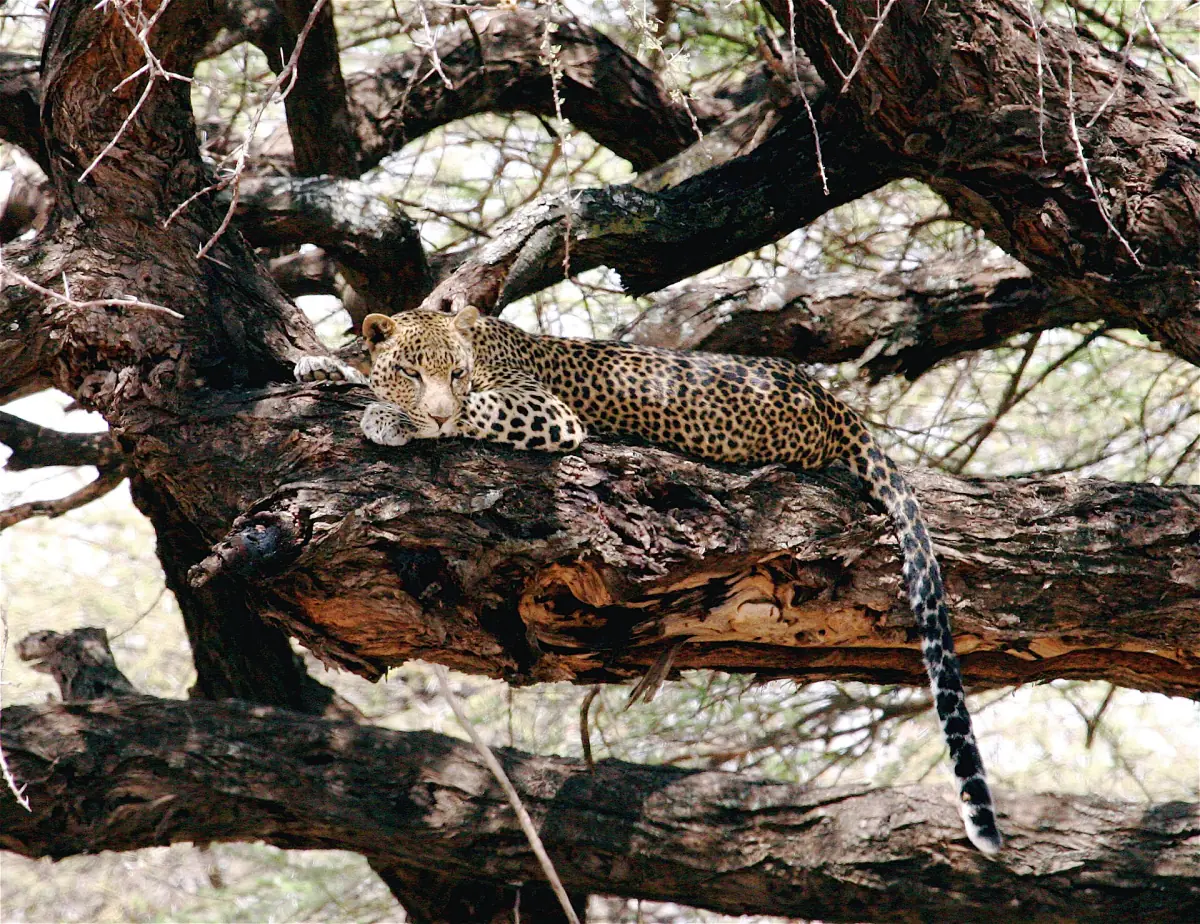
Leopards show up in photos both walking through dry grass and resting on a thick branch of a tree. Cheetahs are also found in the reserve. Sightings of any big cat are a matter of luck, and a guide who knows the area improves your chances without making them a promise.
Our pick: three days of game drives
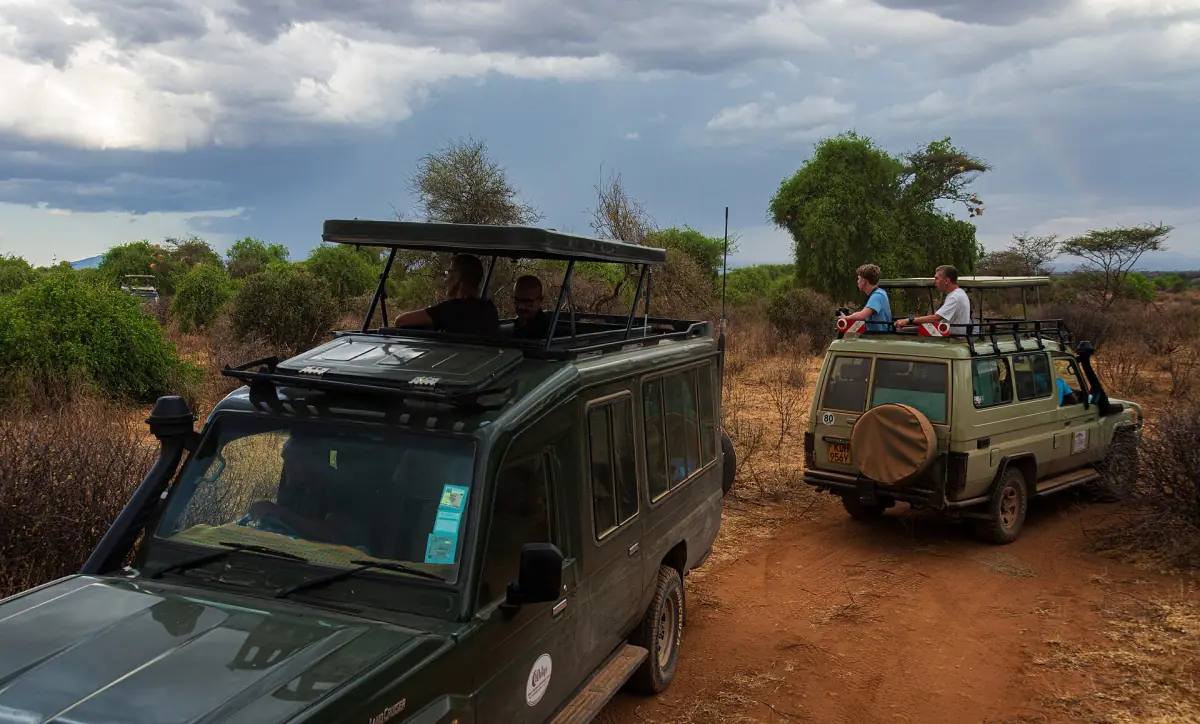
Several game drives over three days in a pop-up roof vehicle give you more chances at the wildlife, though a sighting is never guaranteed.
Hand-picked tours, booked through GetYourGuide. Prices are indicative starting prices in US dollars (as of October 2026). Tap a tour for live availability and the current price in your currency.
Samburu wildlife safaris
Game drives, fly-in safaris and day trips for elephants, big cats and birds, with live prices and availability.
Wild dogs and other rare sightings
Sightings happen, guarantees do not.
Sightings of wild dogs and cheetahs in the Samburu area were recorded between July and September 2021. These are records from one season, not a sign that a pack lives here today or that you will find one. Treat a sighting of wild dogs as a lucky extra and not as a goal for your trip.
Ask your guide what has been seen in the last days. Recent news from other guides helps more than anything else.
Antelope and other plant-eaters
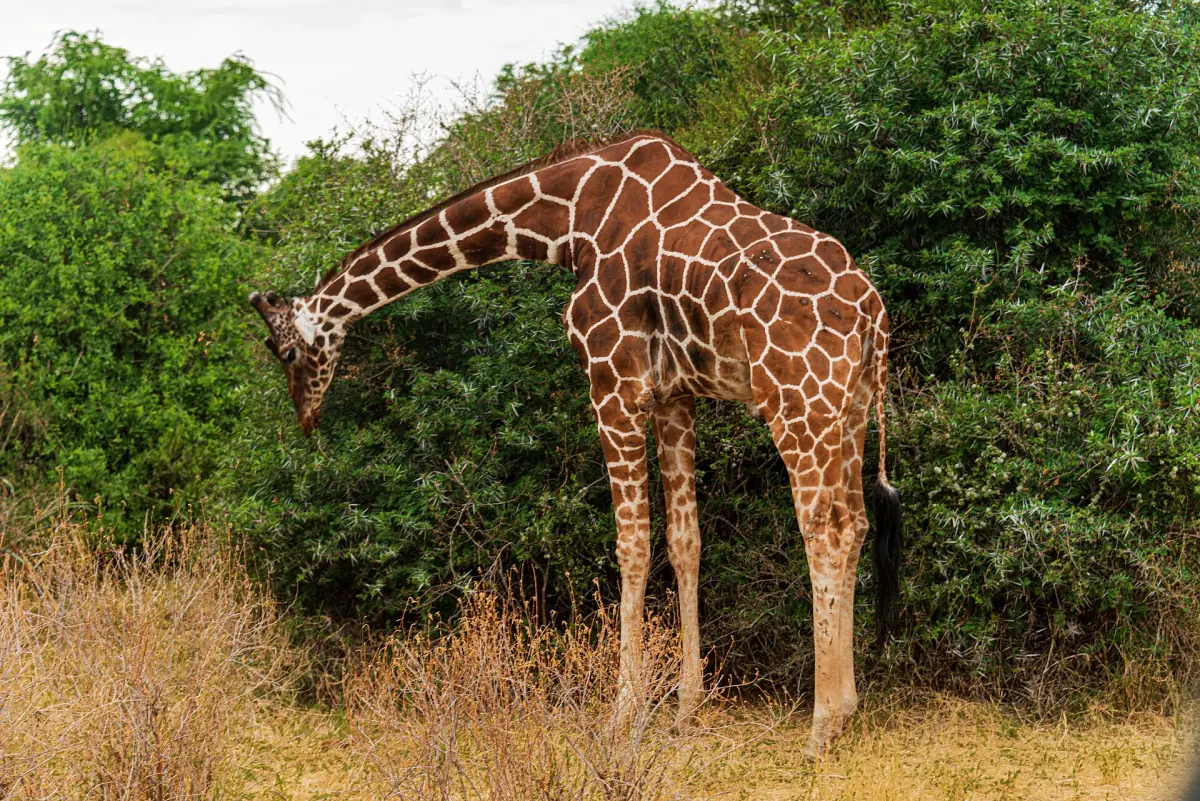
Impala and both the greater and the lesser kudu live in the reserve. The Special Five add the gerenuk, the Beisa oryx, the reticulated giraffe and the Grevy's zebra to the list of herbivores. You can read about each species on the Special Five page.
Water matters in this dry landscape: the clear springs of Buffalo Springs draw animals in dry periods, and a drive along the Ewaso Nyiro River is a good start. The crocodiles of the river are covered on the river page.
Birds of Samburu
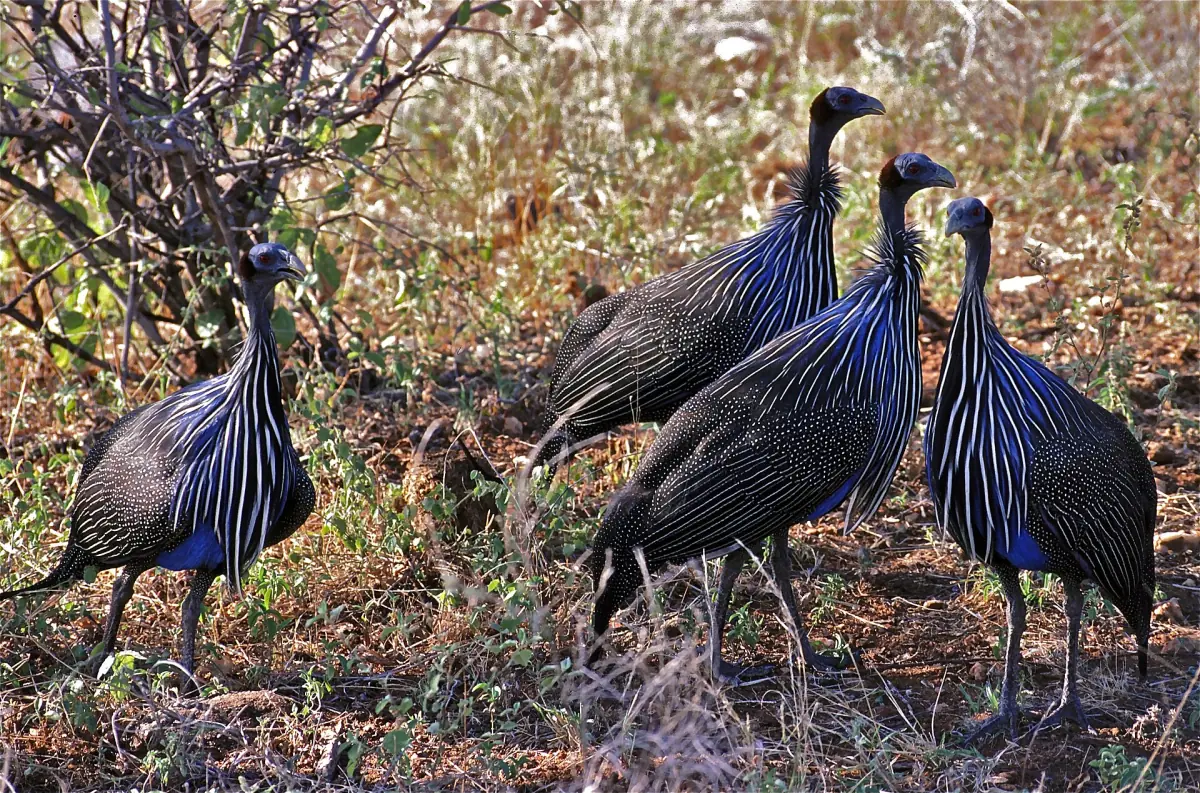
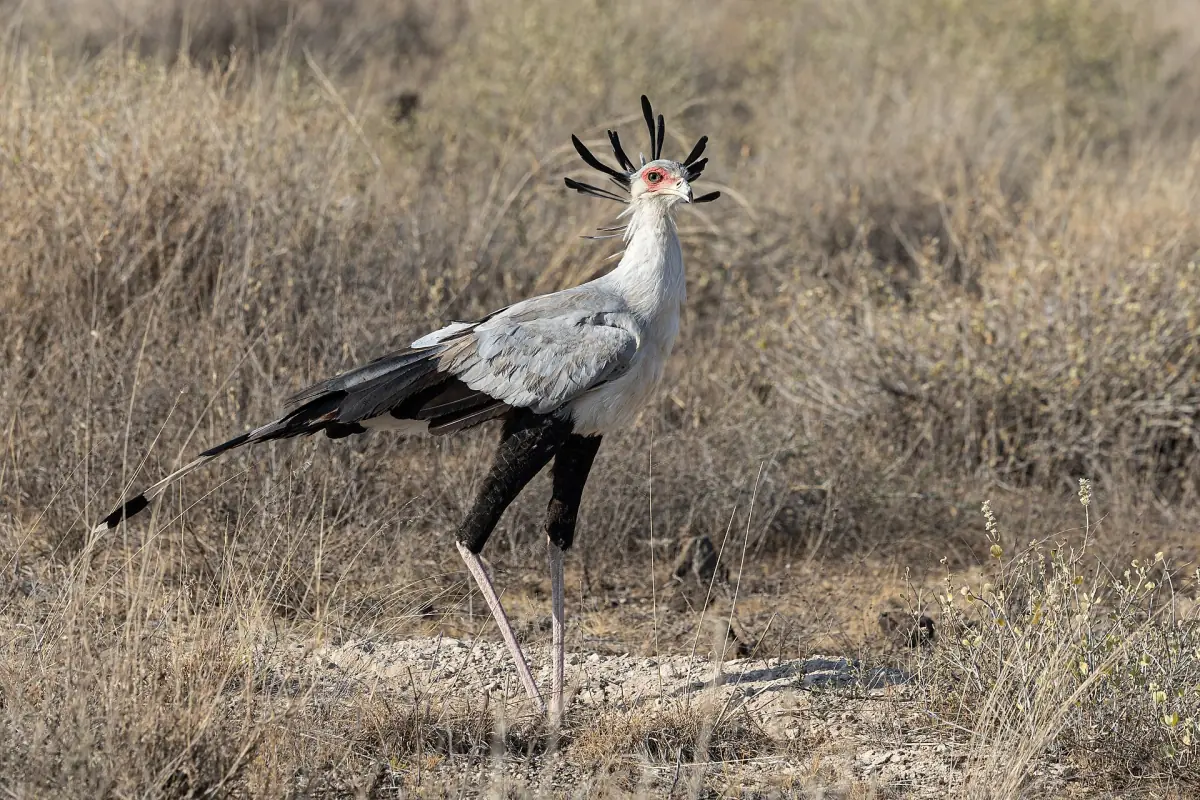
Birders find hornbills, vulturine guineafowl, weavers and birds of prey in the reserve. Photos show a group of guineafowl searching the ground for food.
For Samburu and Buffalo Springs together, more than 380 species were recorded in 2001. For Samburu alone, more than 350 were recorded in 2015 to 2017. The two numbers cover different areas and different times, so do not add them or compare them one to one. A pair of binoculars is enough to get started.
Seeing animals responsibly
Simple habits that protect the animals and your trip.
Stay in the vehicle
The usual safari rules ask visitors to stay in the vehicle except at marked places, not to feed animals and not to drive off the track or at night.
Keep a safe distance
The usual distance is at least 20 m from animals. Your guide knows what is right for each situation.
Plan the season
Rain and heat change how animals use the land. Read the Samburu weather and best time page before you fix your dates.
Compare with other parks
If you are choosing between destinations, the Maasai Mara wildlife guide and the Tsavo wildlife guide show what lives elsewhere in Kenya.
Samburu animals: frequently asked questions
Which animals live in Samburu National Reserve?
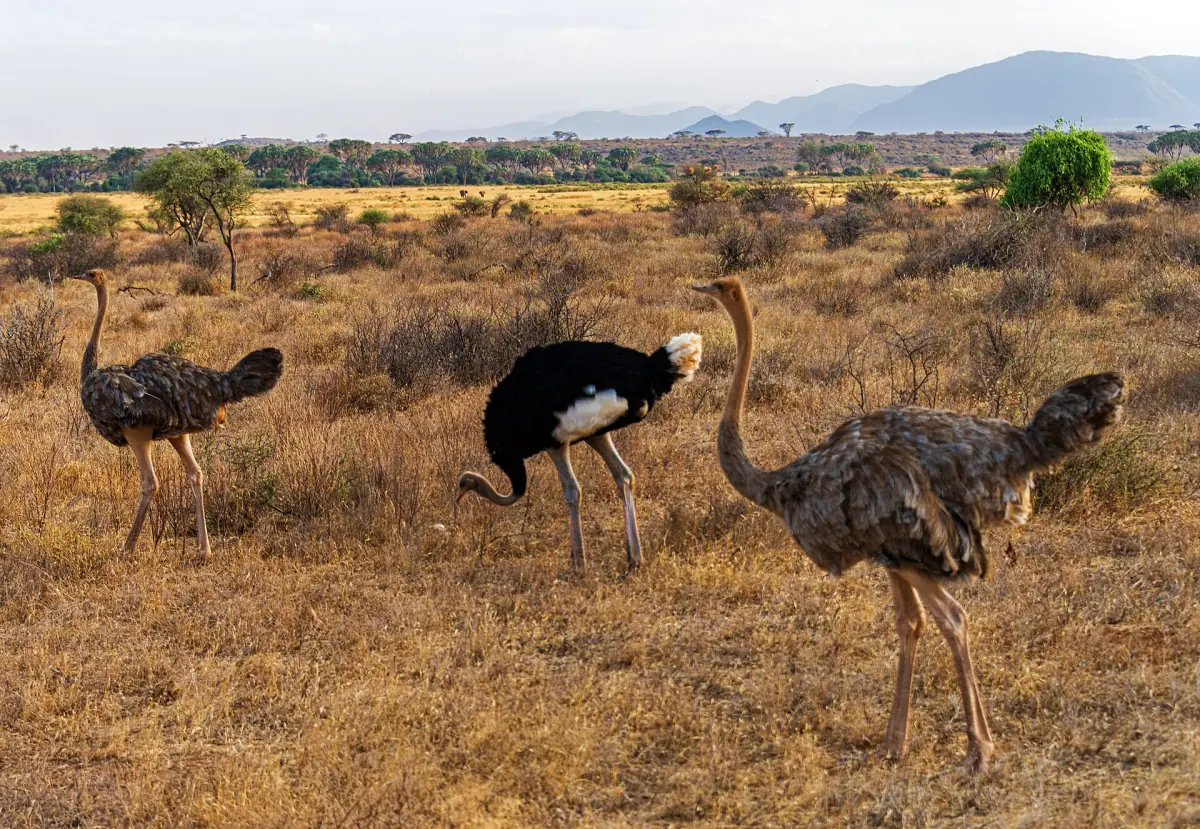
Elephants, lions, leopards, cheetahs, impala, greater and lesser kudu, and many birds such as hornbills, vulturine guineafowl, weavers and birds of prey. The Special Five add Grevy's zebra, reticulated giraffe, gerenuk, Beisa oryx and Somali ostrich.
How many elephants are there in Samburu?
There is no current count to quote. Researchers have recorded more than 900 individually known elephants in the reserves along the Ewaso over several decades, which is not the number living there today.
Will I see lions and leopards?
Nobody can promise it. Lions are monitored in the wider Samburu and Isiolo area, and leopards are seen in the reserve, but sightings need luck and patience.
How many bird species are there?
More than 380 species were recorded for Samburu and Buffalo Springs together in 2001, and more than 350 for Samburu alone in 2015 to 2017. The areas and years differ, so the numbers cannot be added.
Can I see wild dogs?
Sightings were recorded in 2021, but there is no guarantee of a resident pack or regular sightings.
Is this the official site of Samburu National Reserve?
No. This is an independent travel guide. It is not run by Samburu County, Isiolo County, the Kenya Wildlife Service or any safari operator.