The Ewaso Nyiro River at a glance
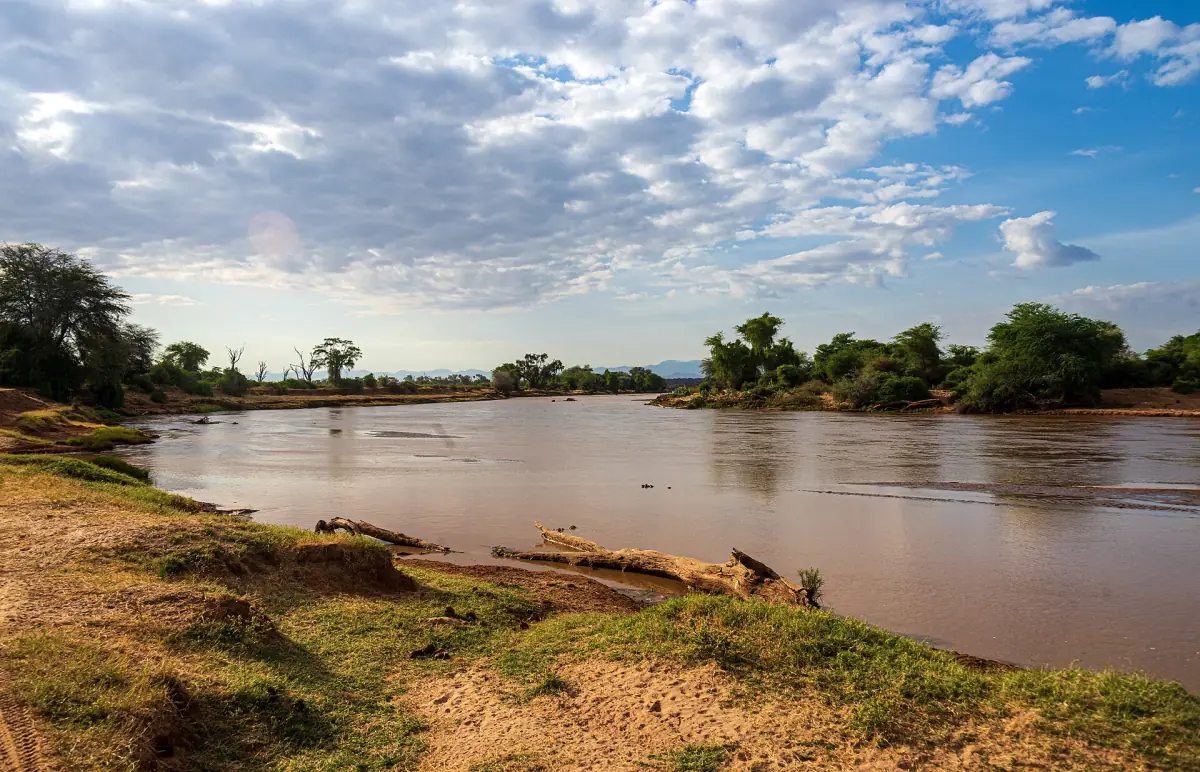
The Ewaso Nyiro River is the reason there is so much life in this dry part of northern Kenya. The river system on this page is the Ewaso Ng'iro North. Samburu National Reserve lies on its north bank. Buffalo Springs National Reserve lies on the south bank in Isiolo County, and Shaba is the third reserve on the same river. Each of the three has its own administration and its own rules.
The river and its banks are also where most game drives start. Wildlife comes to the water, and the doum palms, acacias and grassland along the banks make it easy to see how the landscape follows the river. See the Samburu wildlife guide for the animals and the Samburu safari options for guided drives along the river.
Where the Ewaso Nyiro rises and flows
From the Mount Kenya highlands to the dry north.
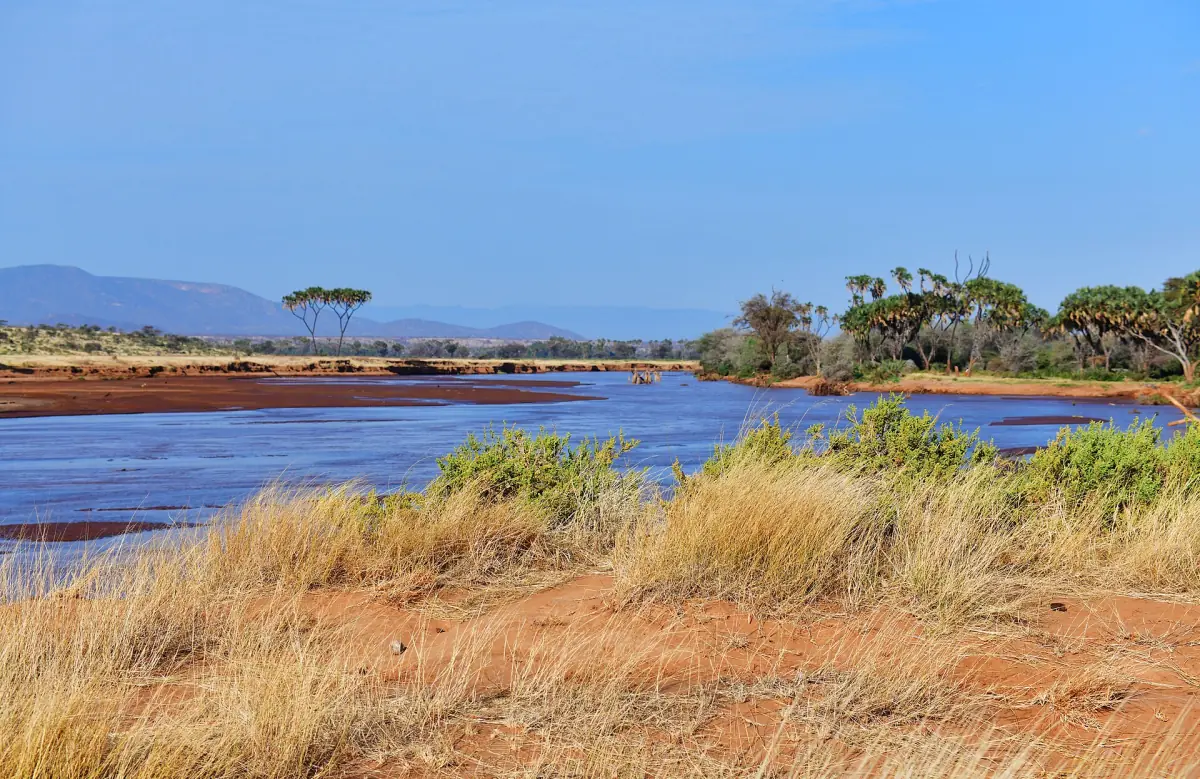
The Ewaso Ng'iro North rises in the highlands around Mount Kenya. Among its tributaries are the Ewaso Narok, the Nanyuki and the Isiolo. After the highlands the river runs north through drier country, where it passes the three reserves of Samburu, Buffalo Springs and Shaba. Nobody should expect the same flow all year.
Archer's Gate, the main gate used for Samburu, is at Archers Post. Read about the gateway towns on the Isiolo and Archers Post page. The river also marks an administrative line: Samburu lies in Samburu County, while Buffalo Springs and Shaba are on the Isiolo side.
Crocodiles and wildlife along the river
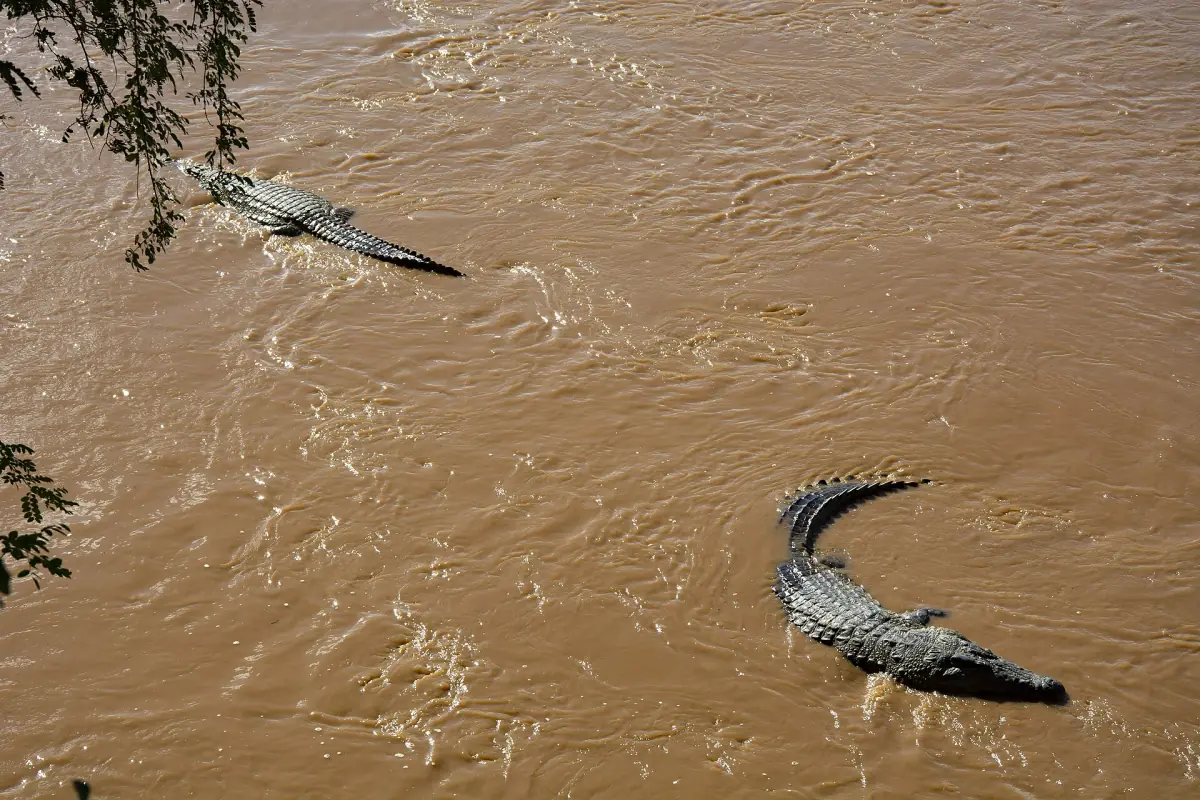
Crocodiles live in the Ewaso Nyiro in Samburu. Photos from above show two crocodiles swimming in the muddy water. For that reason swimming in the river is a bad idea, and you should keep clear of the bank when you leave the vehicle at a marked stop.
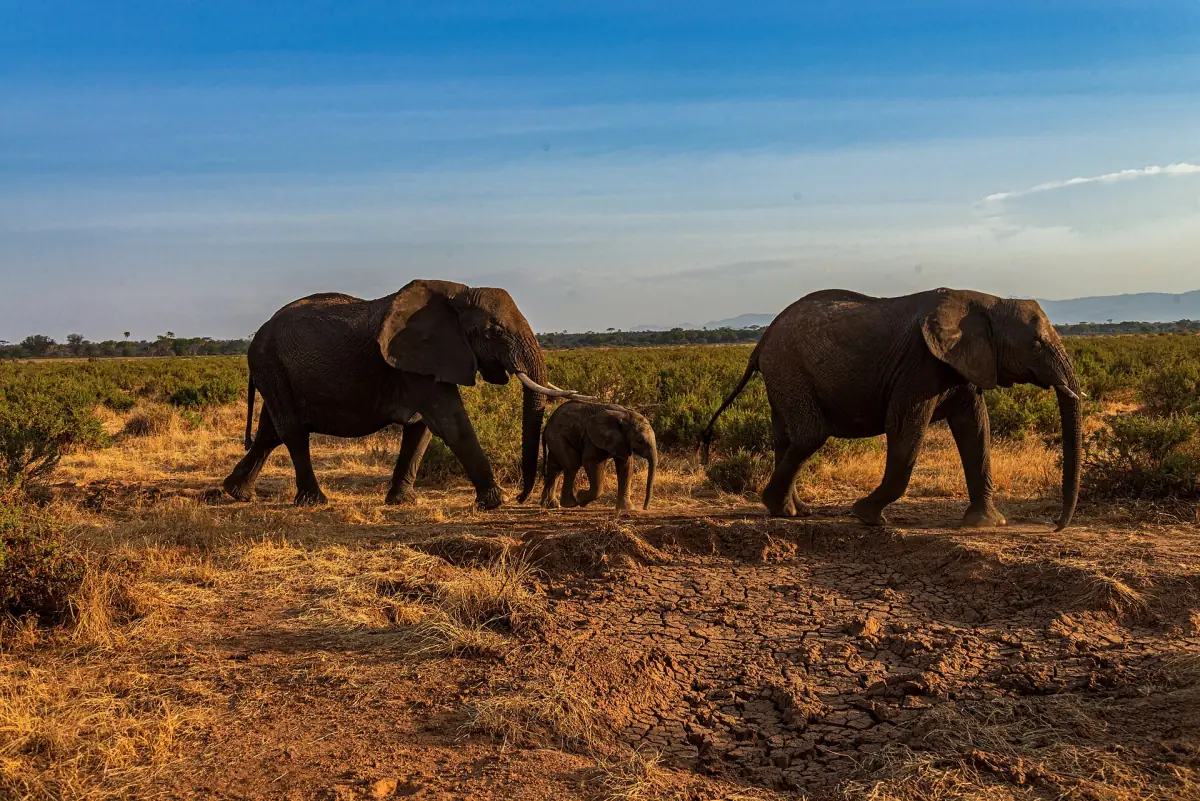
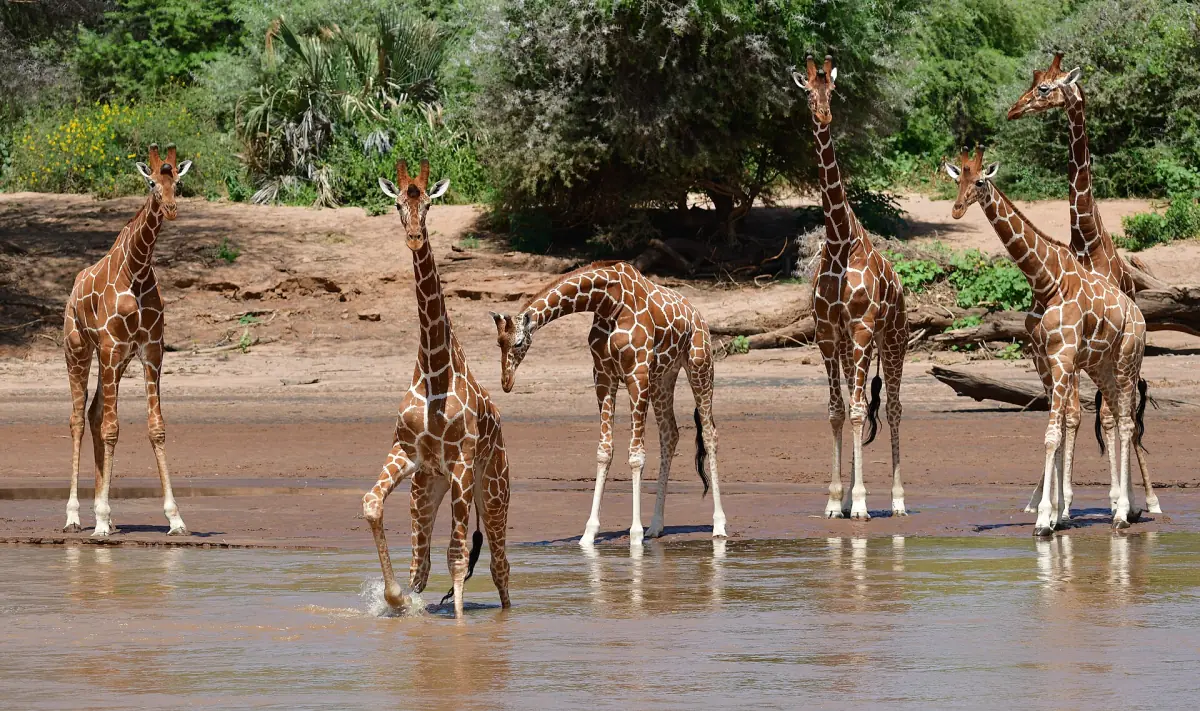
Other animals use the river too. Photos show elephants and a giraffe crossing the water together, and reticulated giraffes standing in the shallows. A morning along the river is a good way to look for animals. The Special Five include several species that you can look for here.
Our pick: three days along the Ewaso Nyiro
The drives on this three-day trip cover Samburu and the Ewaso Nyiro area, so you spend two nights close to the river.
Hand-picked tours, booked through GetYourGuide. Prices are indicative starting prices in US dollars (as of October 2026). Tap a tour for live availability and the current price in your currency.
Samburu safaris along the river
Game drives, fly-in safaris and day trips in northern Kenya, with live prices and availability.
Doum palms and the riverside landscape
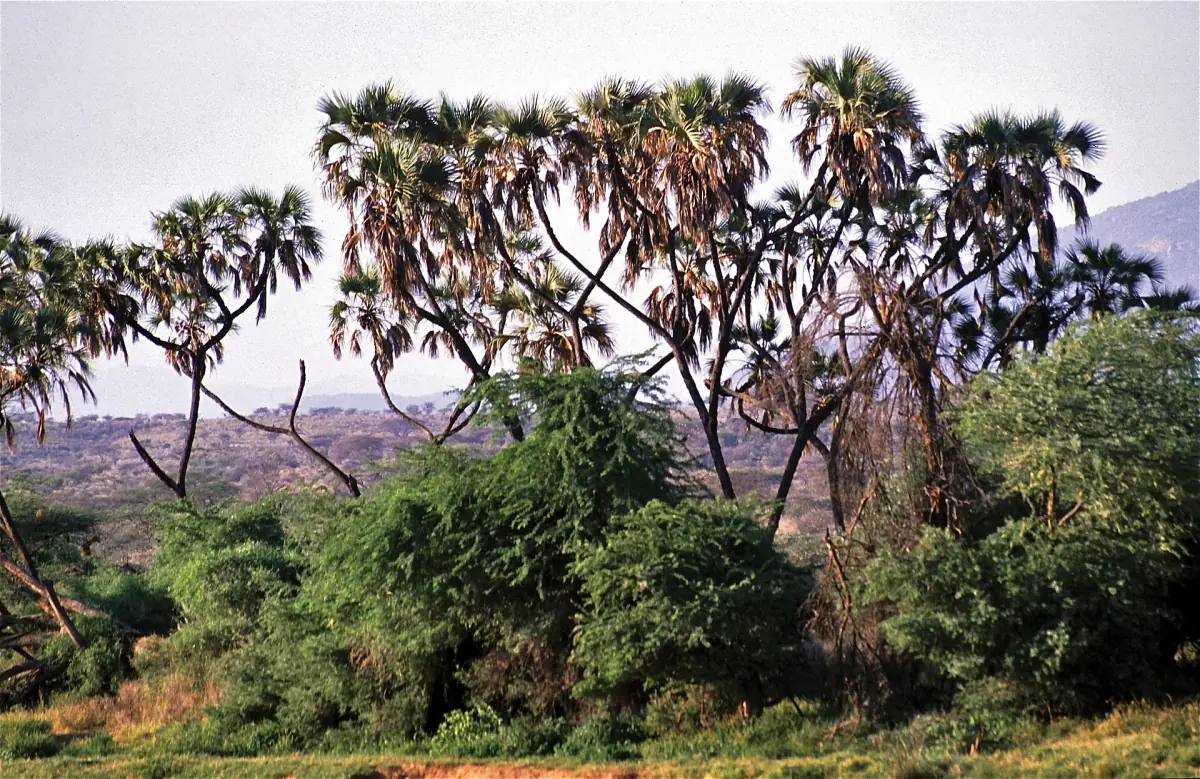
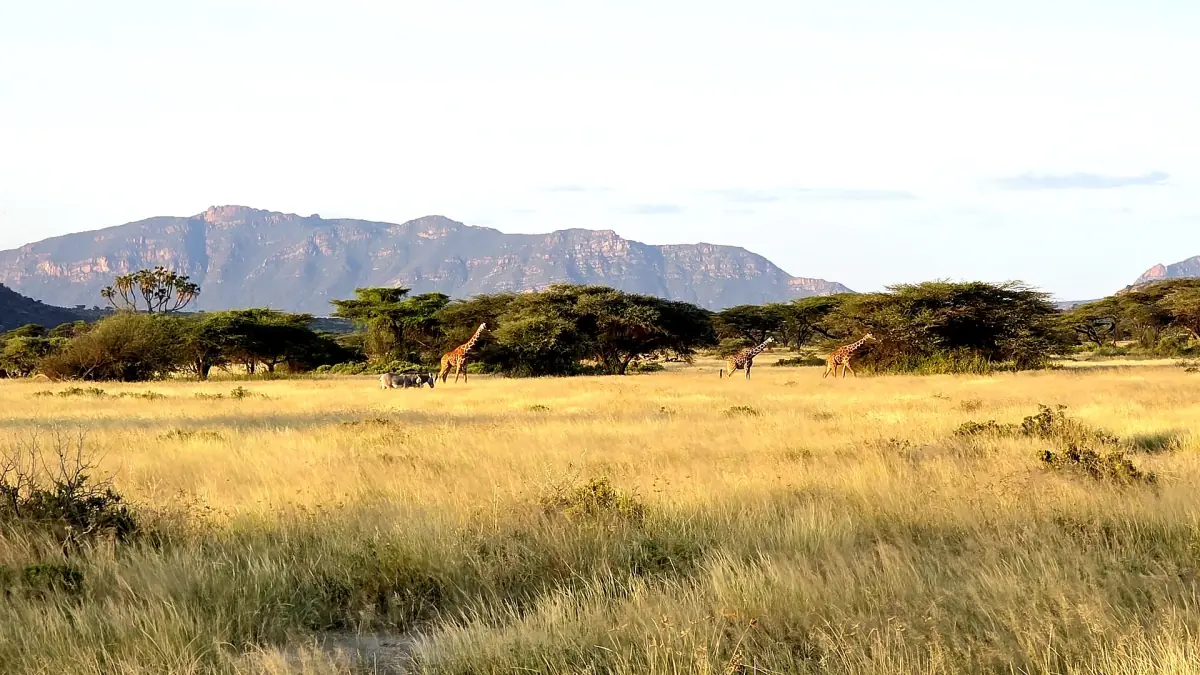
The reserve is a landscape of doum palms, acacias, grassland and rock formations. The tall doum palms stand along the water and on slopes, and photos show them in silhouette against an orange sunset. Together with the grass banks and distant hills they give the river its look.
Ask your lodge or camp about timings and where the vehicle can stop for photos at the end of the day.
Drought and flood: a river that changes
Two events that show how much the water level can swing.
Drought in 2022
In July 2022 Save the Elephants observed a shortage of fodder, overgrazing and conflicts between people and elephants as far as Archers Post. It is a record of one dry spell and not a statement about the water today.
Flood in 2010
On 4 March 2010 the flooding of the Ewaso destroyed the research station of Save the Elephants and a camp, along with other buildings nearby. It is history and does not mean that anything is closed now.
What it means for you
Do not count on the river to look the same on every trip. Water level, grass and animal movements change from season to season. Ask your guide how the area looks when you arrive.
Rain, roads and river safety
Seasonal points to keep in mind.
This region has two rainy seasons, with long rains from March to May and short rains from October to December. The edges of each season are flexible. In the rainy months, heavy rain can wash out roads and fill streams quickly. Never drive or walk through a flooded river or channel, and follow the advice of your guide and driver. Read the Samburu weather and best time page for the season in more detail.
Lodges and camps near the river differ in position. The where to stay guide describes the areas, and your host can tell you about the road conditions on the day.
Ewaso Nyiro River: frequently asked questions
Where does the Ewaso Nyiro River start?
The Ewaso Ng'iro North rises in the highlands around Mount Kenya. Its tributaries include the Ewaso Narok, the Nanyuki and the Isiolo.
Which reserves lie on the Ewaso Nyiro?
Samburu National Reserve on the north bank, Buffalo Springs National Reserve on the south bank and Shaba National Reserve. Each has its own administration and rules.
Are there crocodiles in the river?
Yes. Crocodiles live in the Ewaso Nyiro in Samburu, so do not swim in the river and stay clear of the bank.
Is the water level the same all year?
No. The river changes with the seasons, and a drought in 2022 and a flood in 2010 show how far it can swing. Do not expect an even flow on any trip.
Is it safe to cross the river or a stream after rain?
No. After heavy rain, roads can wash out and streams can rise quickly. Never cross a flooded river or channel and follow your guide.
Is this the official site of Samburu National Reserve?
No. This is an independent travel guide. It is not run by Samburu County, Isiolo County, the Kenya Wildlife Service or any safari operator.